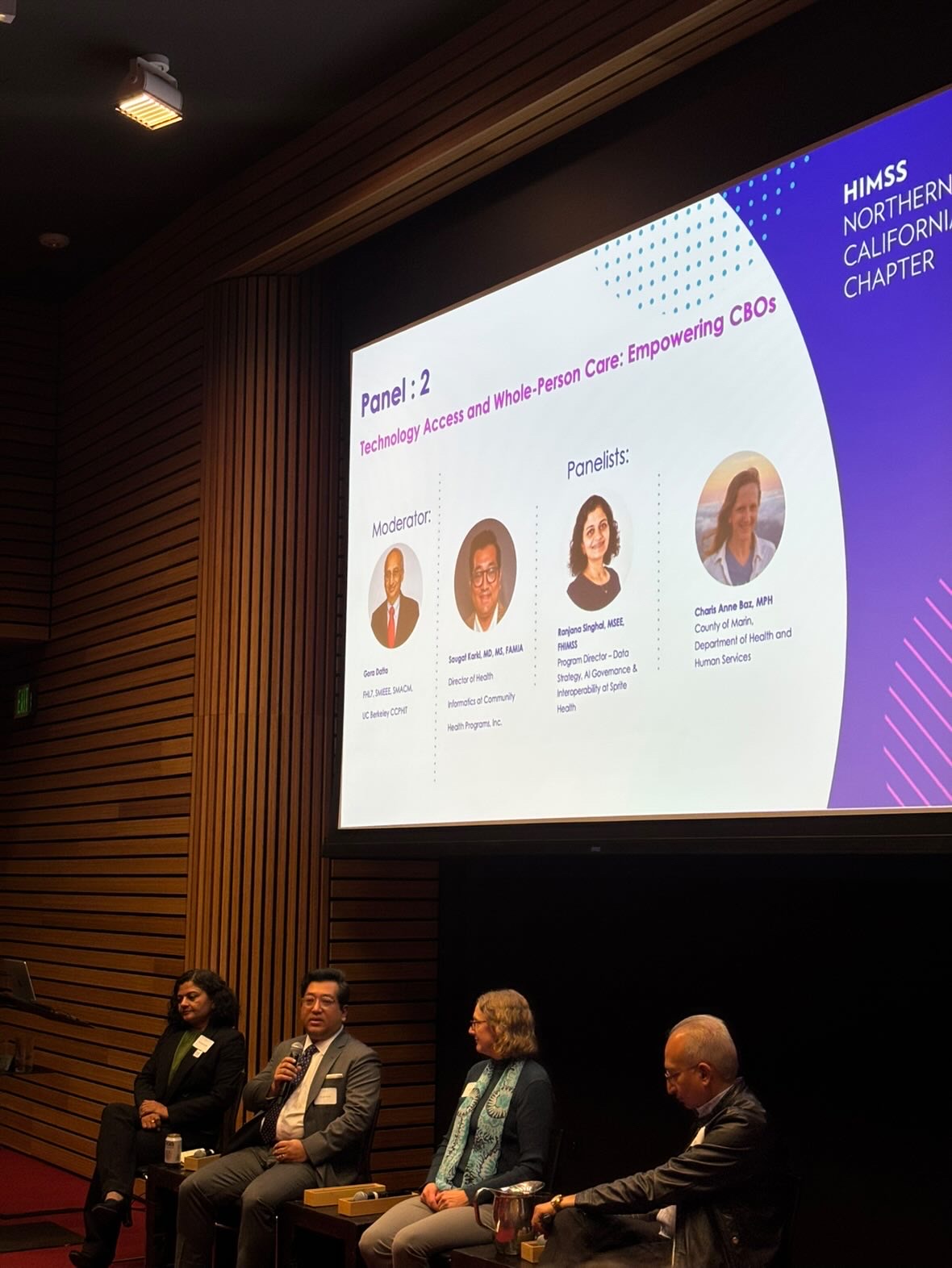
I joined a panel at the HIMSS Northern California Chapter’s Public Health Informatics Symposium at the David Brower Center in Berkeley to talk about something I think about constantly: what it actually takes to see a patient whole.
In community-based and value-based care settings, fragmented data isn’t just an operational inconvenience — it’s a clinical liability. When we only see a person’s medical record, we’re seeing a fraction of what shapes their health. The conversation on this panel pushed toward what it means to build systems that reflect the full picture.
One of the points I kept coming back to: we have Health Information Exchanges. We’ve been building them for years. And yet most of them are dramatically underutilized. I think part of the reason is that we haven’t decided, as a field, what kind of infrastructure they are. My argument is that HIEs should be treated like public utilities — like water or electricity. Not a product you opt into. Not a competitive differentiator. A shared backbone that everyone can build on.
That framing matters because it changes who’s responsible for funding them, who governs them, and what access looks like for smaller organizations — especially CBOs, which are often closest to the patients with the highest need and furthest from the technology.